Key Points for the 2026 Luxury Watch Market
- Key Points for the 2026 Luxury Watch Market
- Executive Summary: The Evolution of Luxury Horology
- Luxury Watch Market Outlook
- Luxury Watch Market Size and Key Metrics
- Luxury Watch Market Segmentation
- Drivers of Growth
- Technology and Innovation
- Industry Analysis and Challenges
- Luxury Watch Industry Opportunities
- Competitive Landscape (Key Players)
- Luxury Watch Market Forecast: 2026–2035
Executive Summary: The Evolution of Luxury Horology
To understand the global luxury watch market in 2026, it is worth tracing the industry’s defining arc:
- 19th century: Swiss industrialisation lays the groundwork for precision watchmaking. Patek Philippe (est.1839) and Vacheron Constantin, pioneers of the complication watch movements of haute horologerie, blaze a trail that is yet unmatched.
- 1970s – The Quartz Crisis: Japanese quartz movements disrupt Swiss mass-market producers. Entry-level Swiss watch volumes collapse, forcing a structural rethink of the industry’s value proposition.
- 1990s–2000s – The Mechanical Revival: Brands reframe mechanical watches as cultural artefacts and symbols of craftsmanship rather than mere timekeeping instruments. Rolex, Audemars Piguet’s Royal Oak, and Patek Philippe’s Nautilus become enduring cultural touchstones.
- 2010s – Digital Retail and the Pre-Owned Boom: Online marketplaces grow into global marketplaces – from niche to mainstream. The second-hand market receives institutional validation, with brands starting certified pre-owned programmes to jump in on the action and professionalize resale.
- 2022–2026, The New Paradigm: Product, innovation, premiumisation, and DTC digital customer engagement become top priority for top-tier watch brands, with brand-owned CPO programmes, bespoke personal touchpoints and Limited Edition offerings becoming the new competitive imperative in an ever more complex export market where older export markets plateau and new horizons form within South Asia, the Gulf and Latin America.
Luxury Watch Market Outlook
The global luxury watch market is valued at USD 50.17 billion in 2025 and is projected to experience a CAGR of 4.90% during the forecast period (2026-2035), with the market reaching USD 80.95 billion by 2035, driven by the growing disposable income of HNWIs, increased awareness of Swiss and luxury mechanical engineering, and growing influence of luxury brands via offline stores and online platforms.
A luxury watch is classified based on the high price they command, high-quality craftsmanship, the use of superior materials like gold or platinum along with a sapphire crystal, and hand-assembled movements. Manufacturers of luxury watches are devoted to designing flawless pieces where precision, quality, and high performance are all ensured, which has led to the high consumer demand for such products, especially the ones that are limited or available only from elite collections.
Most luxury watch makers place a restriction on production volume to keep their watches unique and valuable. The growing number of HNWIs around the world, along with watches being a good storing and appreciation option for value, continues to push up demand for luxury timepieces in primary and secondary markets as buyers view good timepieces as a form of wealth accumulation and investment instead of just an accessory.
Luxury Watch Market Size and Key Metrics
| Metric | Value |
| Global Market Value (2025) | USD 50.17 Billion |
| Projected Market Value (2035) | USD 80.95 Billion |
| Forecast CAGR (2026–2035) | 4.90% |
| Fastest-Growing Product Segment | Mechanical Watches |
| Largest Product Segment by Share | Electronic Luxury Watches |
| Dominant Distribution Channel | Offline (Boutiques & Multi-Brand Retailers) |
| Fastest-Growing Distribution Channel | Online |
| Leading Regions | Asia Pacific, Europe, North America |
| Emerging High-Growth Regions | Middle East & Africa, Latin America |
Source: Expert Market Research
Luxury Watch Market Segmentation
By Product Type
| Segment | Status | Key Insight |
| Electronic Luxury Watches | Largest Share | Fuelled by demand for heart rate monitoring, GPS, sleep tracking, and phone integration in premium-tier wearables |
| Mechanical Luxury Watches | Fastest Growing | Driven by rising popularity as a style statement, collector’s asset, and intergenerational heirloom; viewed as an alternative investment |
Market overview: electronic luxury watches today occupy a greater slice of the global pie, catering to the increasing demand for versatile, top-tier products that carry the cachet of a well-known designer label, along with sophisticated tech capabilities like health and connectivity monitoring. Customers splashing out on smart high-end models want not just time-telling. They also desire seamless blending of technique and artistry. However, on forecast time, the market segment likely to see quickest growth.
Mechanical high-end timepieces: Traditional Mechanical time pieces are set to boom: Consumers, particularly the new wave of horological enthusiasts, can certainly appreciate the enduring allure of a hand-made mechanical movement, complete with springs, gears and complicated functions that involve hundreds of hours to construct.
Brands that include Patek Philippe, Rolex, Audemars Piguet and Vacheron Constantin spearhead the high-end category by not only focusing on exclusive releases but also uncompromising craftsmanship.
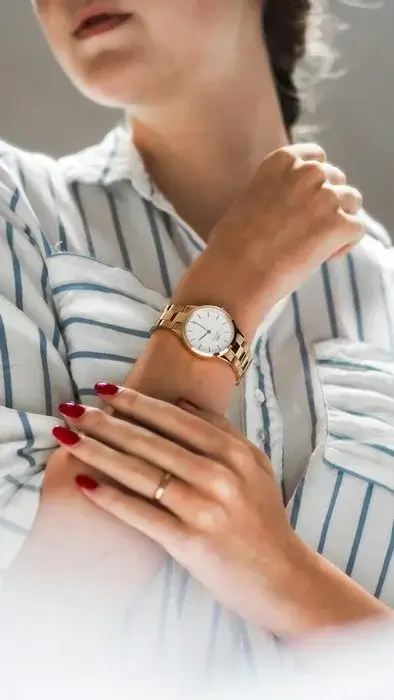
By Distribution Channel
| Channel | Status | Key Trend |
| Offline (Boutiques & Multi-Brand Retailers) | Dominant | Tactile purchase experience, brand storytelling, and personalised service remain key drivers; brands expanding their own boutique networks |
| Online | Fast-Growing & Sizable | Increased convenience and accessibility; growing consumer confidence in authenticated online purchases; expansion of CPO digital platforms |
Offline retail remains king in the luxury watch segment. The feeling of holding a mechanical movement in your hands, having the opinion of an expert, purchasing within an atmosphere designed by the brand… That experience carries an emotional and sensory baggage to which digital platforms cannot pretend to aspire today. Whether Patek Philippe, Audemars Piguet, or Rolex, brands do not stop investing in their brand stores, which are boutiques and brand embassies.
However, digital channels already represent a very important part, and it only continues to grow in sales of luxury watches; the ease of access to a wide range and even competitive prices of timepieces on these platforms has made them an increasingly attractive alternative for a “long-term” purchase like these. It’s the case with pre-owned watches, where the emergence of online platforms selling authenticated and guaranteed watches has broadened accessibility for the youngest audience.
By Region
| Region | Market Status | Growth Outlook |
| Asia Pacific | Largest Regional Market | Strong mechanical watch demand; growing HNWI population; key markets: China, Japan, South Korea, India |
| Europe | Dominant & established | Home to Switzerland, global hub of luxury watchmaking; strong tourism-driven retail; France, UK, Germany key markets |
| North America | Large & Mature | United States is a critical high-consideration market; growing interest from younger luxury buyers |
| Latin America | Emerging | Rising prosperity and young urban populations; Mexico emerging as a dynamic centre |
| Middle East & Africa | High Growth Potential | Gulf states – UAE, Saudi Arabia – demonstrating strong and sustained appetite for premium timepieces |
Asia Pacific is the world’s biggest regional luxury watch market driven by a fast-growing number of affluent consumers, a strong appreciation for Swiss watchmaking from cultural standpoints, and powerful aspirational purchases among middle and upper middle-class households.
The Greater China market, composed of the Chinese mainland and Hong Kong, has been the biggest export region for Swiss watches historically, and while it is currently in the throes of a cycle of cooling demand, it is by far the region most important for watch exports. Young and rich, this young and getting-rich population keeps on being growing, with one of the most tantalizing regions that can create value for luxury brands in the world in years to come: India.
The Middle East has proven quite a resilient region of growth, with very large populations with high concentrations of wealth in certain areas in its nations such as Saudi Arabia and the United Arab Emirates; that come along in tandem with luxury timepieces that make the perfect gifts; and an increase in consumers, particularly young ones who look and see.
Europe is the traditional centre of the world where everything is related to watches with the unique watches heritage of Switzerland where watch collectors go and have the time of their lives shopping for some of the best brands in this business while browsing numerous specialised multi-brand boutiques, authorised point of sales and annual trade fairs such as “Watches and Wonders Geneva” to get the know-how of global trends for luxury watch collections;
United States, with a strong brand community composed mainly of high net worth and collectors communities, as well as young generations of millionaires or near-millionaires known as Gen Z and millennials who were recently accustomed to luxury timepiece brands thanks to the development and popularity of online digital tools and pre-owned watch platforms.
Key Market Trends
1. Growing Popularity of Limited-Edition Watches
The luxury market is experiencing another trend as collectors value and spend more on limited-edition or exclusive merchandise. Luxury timepiece manufacturers including Patek Philippe, Audemars Piguet, and Rolex deliberately reduce their yearly production.
Limited-edition watch models can signify something from an anniversary to a collaboration, even to technological innovation, which often carry large markups on the purchase price. The deciding factor behind most purchases is exclusivity.
2. Rising Inclination Towards Customised Watches
Personalisation-led purchasing of luxury has risen across the luxury sector. And in addition to everything, the luxury watch-making sector. In response, luxury watch-makers offer tailor-made options – from dial colours and straps to tailor-made complications – that make an expensive watch, as an alternative to simply any sale, a narrative item of tale.
Some brands, such as Rolex, Patek Philippe and lesser independent watch makers, have earned themselves a reputation on account of their ability to design highly individual timepieces for shoppers.
3. Increasing Reach Through Digital and Experiential Channels
Social media channels such as Instagram, YouTube and TikTok have all democratised horological knowledge and brand narratives to give brands unprecedented access to potential customers without them stepping foot into a boutique. At the very least, millions of people are consuming watch-related content on an hourly basis via watch influencers who can shape the purchase journey. Brands, increasingly, are investing in slick omnichannel solutions linking digital exploration to an impeccable in-store service.
4. Rising Popularity of Couple and Matching Watches
Also interesting, and especially important from Asia Pacific to the Middle East: A rise in couples’ watches or sets- couples buying luxury for the wrist together (as wedding, anniversary presents, etc) to commemorate their relationships has also increased, which adds a small increment to demand and has led to brands creating matching sets.
5. The Pre-Owned and Certified Pre-Owned (CPO) Boom
Once confined to the realms of watch enthusiasts and a tightly knit collector base, the secondary luxury watch market is now a mainstream part of luxury watch retail.
Consumer appetite for purchasing luxury pre-owned watches has ballooned due to the relative value, desire to purchase sustainably, and availability of guaranteed, serviced, and warranted models via brand-supported CPO programmes from mainstream watch manufacturers, and such programs also allow luxury brands the possibility to engage with their customers on the secondary market.
6. Smartwatches vs. Luxury Mechanical Segment
The rise of smartwatches has prompted important questions about competitive dynamics within the broader watch market.
The evidence strongly suggests a complementary rather than substitutive relationship at the premium tier:
| Indicator | Smartwatch Segment | Luxury Mechanical Segment |
| Price Point | USD 150–USD 800 (mainstream) | USD 5,000 to USD 500,000+ |
| Consumer Motivation | Health tracking, connectivity, convenience | Heritage, craftsmanship, investment value, status |
| Growth Driver | Technology feature upgrades, health sensors | Collector demand, HNWI growth, CPO expansion |
| Key Disruption Impact | Entry-level quartz watches significantly affected | Premium mechanical segment remains structurally resilient |
High-end mechanical horology satisfies a completely different consumer need and has shown structural staying power. As opposed to timepieces, mechanical watch purchases are more closely viewed as high-involvement, identity-based products.
Drivers of Growth
The global luxury watch market is propelled by a confluence of demand-side and supply-side factors that collectively sustain its growth trajectory over the forecast period.
Rising Disposable Incomes and HNWI Expansion
The rising affluence across Asia Pacific, the Gulf and developing markets is widening, in a most direct manner, the addressable market for expensive, high luxury products like luxury timepieces. It is logical that with increases in middle-class, aspirational and wealthy consumer populations, new categories like luxury timepieces get amplified in demand as they represent high luxury, high-status consumer articles.
Luxury Watches as Investment Assets
This luxury watch buying, selling and trading market that sees collectors flocking to the few, iconic luxury brands that can hold their value – think, some of the finest from Patek Philippe, Rolex, or Audemars Piguet – only serves to add legitimacy to many rare reference models not simply seen as possessions, but as investment assets, increasingly appealing to many a savvy younger collector also considering tangible alternative investments.
Online Sales Surge
Availability expansion due to the proliferation of luxury online new-brand e-retail and pre-owned platforms has also enabled further penetration into previously inaccessible luxury markets. Availability into markets with a thin physical footprint of luxury outlets can tap into global inventories of pre-owned watches from global players, adding incremental value.
Limited Edition and Exclusive Releases
The strategic deployment of scarcity through limited-edition references generates sustained consumer excitement and secondary market activity, reinforcing brand equity and supporting premium pricing.
Growing Aspirational Demand from Younger Consumers
Millennials and Gen Z consumers are engaging with luxury watch culture at an earlier age and with greater intensity than previous generations, driven by digital content, the investment narrative, and the accessibility of the pre-owned market as an entry point.
Technology and Innovation
The luxury watch market is pursuing innovation on two fronts.
On the complication side, innovation lies in miniaturised mechanical engineering, the constant pursuit of thinner movements, finer escapements, and more complex functions (perpetual calendars, minute repeaters, and tourbillons are good indicators of a true exceptionality in watchmaking beyond the beauty and precious materials) that transform watchmaking timepieces into small feats of engineering. On the materials side too, innovation is critical.
Cases made of ceramic, titanium, carbon composite, and new alloys continue from niche to more broadly available across price points (more resistant, lighter, and more innovative design) compared to gold or steel.
Independent houses like Richard Mille and Hublot made a global reputation through them, whereas more traditional Swiss maisons progressively adopted these technologies.
Digitalization impacts the customer’s purchase process through different channels. Blockchain has the potential to provide added transparency to ensure originality (new or used), mitigate the threat of counterfeit goods, and bring more confidence when buying a luxury watch online, and has started to lead brands to a selling advantage.
Industry Analysis and Challenges
The global luxury watch industry navigates a complex environment defined by both structural opportunity and near-term headwinds.
Currency Volatility: The strength of the Swiss franc against major trading currencies, the euro, US dollar, and renminbi, creates persistent pressure on translated revenues and erodes the price advantage that once made Switzerland an attractive destination for tourist purchases.
Geopolitical and Trade Risks: Tariff uncertainty, particularly in the context of shifting US trade policy, introduces pricing complexity for brands exporting into the world’s largest individual luxury market. Brands must balance price increases that protect margins against the risk of demand suppression in price-sensitive consumer segments.
Demand Moderation in Key Markets: Certain established markets are experiencing cyclical demand softness following a period of extraordinary post-pandemic growth. Strategic diversification into new growth corridors, India, Saudi Arabia, Southeast Asia, and Mexico, is a priority for major groups and independents alike.
Counterfeit Risk: The luxury watch market continues to face the challenge of sophisticated counterfeit products, particularly in online channels. Investment in authentication technology and brand-controlled certified pre-owned programmes is a direct response to this structural risk.
Economic Sensitivity: While luxury goods are generally considered resilient relative to mass-market consumer products, they are not immune to broader economic downturns. Periods of economic uncertainty can suppress high-consideration purchase decisions, particularly among aspirational buyers at the lower end of the luxury price spectrum.
Luxury Watch Industry Opportunities
Despite these challenges, the market presents substantial and well-defined opportunities for brands, platforms, and investors positioned to capitalise on them.
Emerging Market Expansion: India, Saudi Arabia, the UAE, Mexico, and Southeast Asian economies represent the most significant incremental growth opportunities, characterised by young and growing affluent populations, rising brand awareness, and government-supported economic development.
Women’s Luxury Watch Segment: The women’s segment remains meaningfully underpenetrated in high horology and represents a significant opportunity for brands willing to develop genuinely compelling complication-driven collections for female collectors, rather than simply scaling down men’s models.
Pre-Owned and CPO Platforms: The continued professionalisation of the secondary market, through brand-controlled CPO programmes, specialist authentication platforms, and blockchain-verified digital passports, opens substantial incremental revenue opportunities for brands that have historically ceded secondary market value to independent resellers.
Personalisation and Bespoke Services: Consumer willingness to pay meaningful premiums for customised or personalised timepieces represents an opportunity to deepen client relationships, increase average transaction values, and differentiate from competitors.
Digital and Direct-to-Consumer Channels: Brands that invest in seamless, premium digital purchase experiences, combining the storytelling and service quality of the boutique environment with the convenience of online retail, are well positioned to capture the next generation of luxury watch buyers.
Competitive Landscape (Key Players)
The global luxury watch market is characterised by a concentrated competitive structure dominated by three major international conglomerates, Compagnie Financière Richemont SA, LVMH Group, and The Swatch Group Ltd, alongside a set of fiercely independent powerhouses including Rolex SA, Patek Philippe, and Audemars Piguet. The following table summarises the key players identified in the EMR report:
| Company | Notable Brands / Focus |
| Rolex SA | Rolex, Tudor — Global volume leader; disciplined production; Certified Pre-Owned programme |
| The Swatch Group Ltd | Omega, Breguet, Blancpain, Longines, Tissot — Broadest brand portfolio across price segments |
| Audemars Piguet Holding SA | Audemars Piguet — Direct boutique model; Royal Oak iconic status; AP House pre-owned |
| Fossil Group, Inc. | Fossil, licensed brands — Accessible luxury and hybrid smartwatch segment |
| Citizen Watch Company of America, Inc. | Citizen, Bulova, Frederique Constant — Mid-market; eco-drive and precision technology |
| Seiko Watch Corporation | Seiko, Grand Seiko, Credor — Grand Seiko premiumisation; growing Western presence |
| Compagnie Financiere Richemont SA | Cartier, IWC, Jaeger-LeCoultre, Vacheron Constantin, Panerai — D2C focus; Watchfinder CPO platform |
| LVMH Group | TAG Heuer, Hublot, Zenith, Bulgari — Entry-level mechanical funnels; digital innovation |
| Movado Group Inc. | Movado, MVMT, Olivia Burton — Design-led accessible luxury |
| Ralph Lauren Corporation | Ralph Lauren Watches — Lifestyle luxury positioning |
| Others | Independent maisons, regional players, and specialist complications brands |
Luxury Watch Market Forecast: 2026–2035
Based on the market report and forecast 2026–2035, the following trajectory is projected for the global market:
| Year | Projected Market Value (USD Billion) |
| 2025 (Base Year) | 50.17 |
| 2026 | 52.63 |
| 2027 | 55.21 |
| 2028 | 57.91 |
| 2029 | 60.75 |
| 2030 | 63.73 |
| 2031 | 66.85 |
| 2032 | 70.12 |
| 2033 | 73.56 |
| 2034 | 77.17 |
| 2035 | 80.95 |
The forecast reflects a steady, sustained expansion supported by HNWI growth, digital channel development, the maturation of pre-owned ecosystems, and brand penetration into new geographies. Near-term volatility in individual markets is expected to be offset by accelerating growth in South and Southeast Asia, the Gulf Cooperation Council (GCC) states, and Latin America.
Frequently Asked Questions (FAQ)
We would like to thank George Buttler for his valuable contributions.
George Buttler is a business and market research content writer at Expert Market Research, specializing in emerging technologies, digital transformation, and global industry trends. He creates informative and research-focused content related to artificial intelligence, technology markets, and business innovation.
Editor’s Note
The luxury watch industry is entering one of its most transformative decades. As digital authentication reshapes the certified pre-owned segment, and as Asia-Pacific consumers accelerate demand for Swiss heritage pieces, the market is no longer simply about timekeeping — it is about identity, investment, and legacy.
This article draws on multiple market research frameworks to provide a balanced, forward-looking perspective for both industry professionals and curious enthusiasts. At worldweddingguide.com, we cover luxury lifestyle and fine craftsmanship as they intersect with meaningful occasions — and few gifts or symbols carry more enduring weight than a fine timepiece.
The data presented reflects 2026 benchmarks; individual forecasts vary across research firms and should be interpreted alongside broader luxury market conditions.
— World Wedding Guide Editorial Team
Editor’s Note
worldweddingguide.com operates within the Somut Media Digital Publishing Network, dedicated to providing couples with expert guidance and inspiration for creating authentic, meaningful, and seamless wedding experiences.
Many thanks for the photos by Laura Chouette and Amin Hasani on Unsplash , ferarcosn on Pexels